
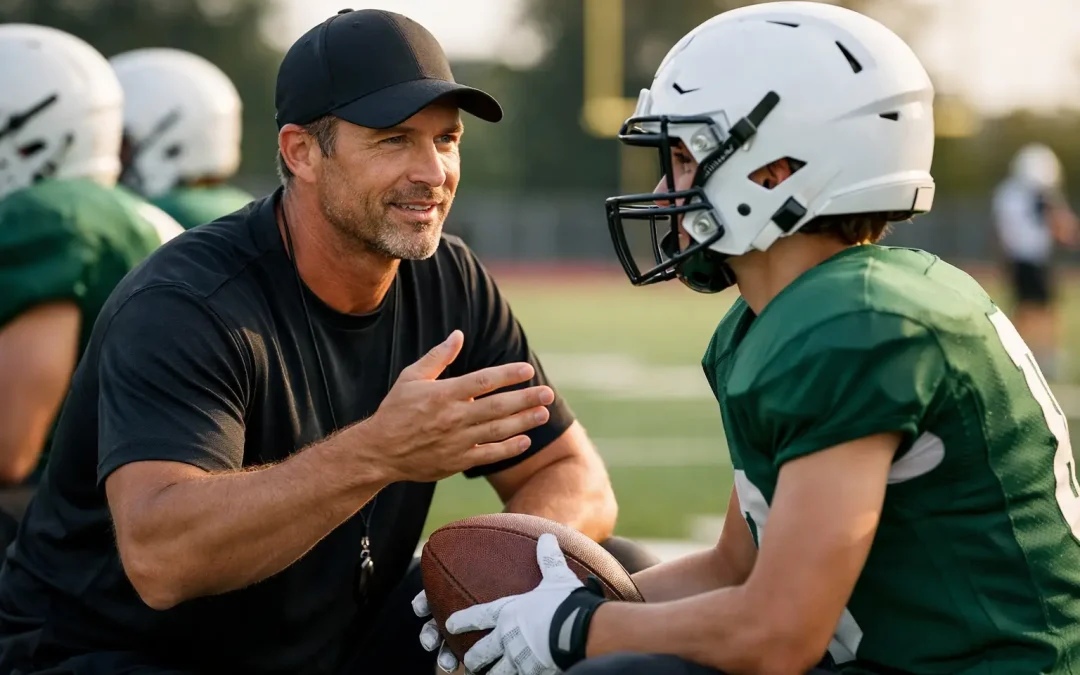
A player misses a clear chance, gives the ball away twice, then spends the rest of the match trying not to make another mistake. The technical ability may be there, but their confidence has disappeared. This is where football mindset coaching for teens matters. It gives young players practical ways to reset, compete with composure and stay connected to the game when pressure rises.
For ambitious players, mindset is not a motivational speech before kick-off. It is a trainable part of performance. It affects how a teenager responds to feedback, prepares for trials, handles selection decisions and performs after a mistake. For parents, it is also a key part of helping a young athlete enjoy the game while pursuing meaningful football goals.
Why mindset changes football performance
Football moves too quickly for players to stop and analyse every decision. A confident midfielder asks for the ball in tight spaces. A goalkeeper recovers quickly after conceding. A winger keeps taking on their fullback after an unsuccessful first attempt. These actions are not only technical or tactical. They are driven by what the player believes they can do in that moment.
Teenage players often experience bigger pressure than adults realise. They may be competing for representative selection, preparing for club trials, comparing themselves with teammates or trying to meet expectations at home. Social media can add another layer, making it easy to measure their progress against highlight reels rather than their own development.
The goal is not to remove pressure completely. Competitive football should feel challenging. The aim is to help players recognise pressure, organise their response and use it to focus on the next action.
Football mindset coaching for teens is practical
Good mindset coaching is not separate from the pitch. It should show up in how a player trains on Tuesday afternoon and performs on Saturday morning. A coach may challenge a player to demand the ball after an error, use a clear communication cue, or reset their body language before defending the next phase.
At Clinical Football, this work sits alongside technical, tactical and physical development. A player cannot build genuine confidence through praise alone. Confidence grows when they have evidence: they have practised a skill repeatedly, understood their position, made better decisions and handled difficult moments in a supported training environment.
For example, a centre-back who is nervous about playing out from the back does not simply need to be told to ‘be confident’. They need progressive practice receiving under pressure, checking their shoulder, choosing the right pass and recovering when the first option is closed. As that player gains solutions, their confidence becomes more reliable.
Confidence is earned through preparation
There is a difference between confidence and overconfidence. Overconfidence can make a player ignore feedback or take unnecessary risks. Real confidence is quieter. It comes from preparation, self-awareness and the willingness to keep working.
Teen players benefit from setting process goals rather than relying only on outcome goals. Making a top squad or scoring in a trial may be the long-term target, but it is not fully within a player’s control. Preparing well, communicating consistently, competing in every duel and making positive decisions are actions they can own.
This approach is especially valuable during trials. Players who focus only on being selected can become tense and hide from the game. Players who focus on their role, work rate and next action are more likely to show coaches what they can genuinely offer.
How players can respond after mistakes
Mistakes are unavoidable in football. The player who never loses possession is usually the player who is not trying to influence the game. The important question is what happens in the seconds after an error.
A simple reset routine can be powerful. First, acknowledge the mistake without drama. Next, use a short cue such as ‘next job’ or ‘win it back’. Then move immediately into the next defensive or attacking responsibility. This prevents one mistake from becoming three.
Body language matters here. Dropped shoulders, hands in the air and blaming teammates tell opponents that a player is rattled. They also take attention away from the next phase. Players should practise neutral, purposeful body language: scan, communicate, recover position and stay available.
Parents can support this by avoiding a post-match interrogation in the car. Start with calm questions such as, ‘What did you learn today?’ or ‘What are you pleased you kept trying?’ There will be a time for technical feedback, but a teenager who has had a difficult match needs space to process before they can learn from it.
Building composure under pressure
Composure is not about being passive. It is the ability to remain clear and decisive when the match becomes chaotic. A composed player can still tackle hard, press aggressively and play with intensity. They simply do not let emotion take over their decision-making.
Training should include realistic pressure. Smaller spaces, time limits, numerical disadvantages and competitive game scenarios help players become familiar with discomfort. If every drill is easy, a player may look confident in training but struggle when a match demands speed, contact and fast decisions.
The level of challenge needs to be right. Too little pressure does not develop resilience, while too much can overwhelm a player and reinforce fear. Individualised coaching helps identify where the player needs stretching and where they need repetition to feel secure.
Breathing can also be useful before a trial, penalty or high-pressure set piece. A slow breath is not a magic fix, but it can lower physical tension and create a brief moment of control. Pair it with a specific job: track the runner, receive on the half-turn, call for the ball, or attack the near post.
Feedback without fear
Players improve fastest when they can accept feedback without treating it as a personal attack. This can be difficult in the teenage years, particularly for players who care deeply about performing well. A correction from a coach may sound, to them, like proof they are not good enough.
The right environment makes a difference. Players need honest feedback, clear standards and the chance to apply corrections straight away. They should understand that being coached is a positive sign: someone is investing attention in their development.
A useful habit is to ask players what they noticed before supplying the answer. A coach might ask a fullback, ‘What did you see before their winger got in behind?’ This encourages game understanding and accountability. It also helps the player become less dependent on constant instructions from the sideline.
Parents can reinforce this mindset by praising behaviours such as effort, listening, courage and consistency. Saying ‘I liked how you kept asking for the ball’ carries more long-term value than focusing only on goals, wins or selection outcomes.
A stronger routine away from the pitch
Mindset is shaped before a player arrives at training. Poor sleep, rushed preparation and inconsistent nutrition can make small setbacks feel much bigger. Teenagers do not need a professional footballer’s lifestyle, but they do need routines that support their goals.
A simple weekly plan should protect school commitments, rest, football training and recovery. Players preparing for a trial can lay out their kit the night before, arrive early, know their position and set two or three process goals. This reduces avoidable stress and lets them focus on playing.
It also helps to keep a short training journal. After a session or match, players can record one thing done well, one area to improve and one action for the next session. The purpose is not to obsess over every performance. It is to make progression visible, particularly during periods when improvement feels slow.
When extra support is needed
Some nerves are normal. A player who cares about football may feel anxious before an important match or disappointed after being left out of a squad. However, if worry is consistently affecting sleep, school, relationships or willingness to train, parents should take it seriously and seek appropriate support beyond football coaching.
A football coach can help a player build habits, confidence and match readiness. For broader mental health concerns, a qualified health professional is the right person to involve. The best support system is one that puts the young person first, not just their next result.
The teenager who learns to reset after a mistake, welcome feedback and prepare with purpose gains more than better performances. They build habits that make football more enjoyable, more competitive and far more sustainable as their opportunities grow.