
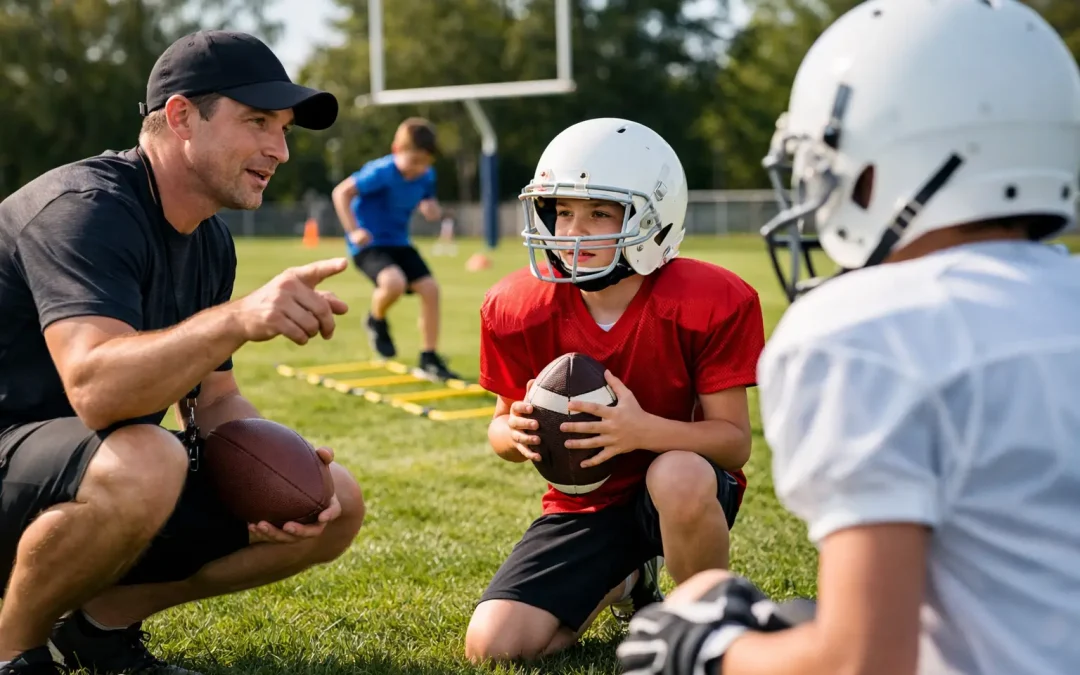
The first few months in football matter more than most parents realise. A beginner does not just need a place to run around and kick a ball. They need structure, encouragement and coaching that teaches the right habits early. That is why football coaching for beginners should focus on more than keeping players busy. It should build confidence, clean technique and a real understanding of the game from the start.
For young players, those early sessions often shape how they feel about football for years. If training is confusing, chaotic or too advanced, beginners can switch off quickly. If it is too easy, they do not improve. The best beginner coaching sits in the middle – challenging enough to create progress, but clear enough that players feel capable every step of the way.
What beginners actually need from football coaching
A beginner is not simply a smaller version of an experienced player. They process information differently, fatigue faster and usually need more repetition to make a skill feel natural. Good coaching recognises that development starts with simple foundations done well.
That means a player should be learning how to receive the ball, pass with control, dribble under pressure, move into space and strike the ball with balance. Just as importantly, they should begin to understand when to use each action. Technical development without game awareness leaves players limited. Game awareness without technique leaves them frustrated.
The emotional side matters too. Many beginners are still learning how to handle mistakes in front of others. A coach who can correct technique while protecting confidence creates a much better learning environment. Players improve faster when they are willing to try, fail, adjust and try again.
Football coaching for beginners should be progression-based
One of the biggest mistakes in beginner development is random training. A player works on passing one week, shooting the next, then spends a session waiting in lines for their turn. It may look like football, but it does not create reliable improvement.
Progression-based coaching gives each session a purpose. Skills are introduced in a simple form, repeated with guidance and then challenged in more realistic situations. A beginner might first practise passing without pressure, then pass while moving, then combine with a teammate, and finally use that same skill in a game-based exercise. That sequence matters because it helps the player connect technique to match play.
This is where individualised coaching can make a real difference. In a large team session, beginners often get lost between the strongest and weakest players. In one-on-one or small group environments, the coach can adjust the session to the player’s age, coordination, confidence level and current understanding. That usually means more touches, more corrections and quicker progress.
The fundamentals that matter most early on
Parents often ask which skills a beginner should learn first. The answer depends on age and experience, but some areas nearly always deserve priority.
Ball mastery is one of them. A beginner who feels comfortable touching and moving with the ball is more likely to stay calm in games. That comfort does not come from one flashy move. It comes from repeated work on first touch, close control, changing direction and using both feet.
Passing and receiving are just as important. Many young players can kick the ball, but fewer can pass with intent and receive in a balanced body shape. These basics sound simple, yet they underpin nearly every phase of football.
Then there is movement. Beginners need to learn that football is not only about the player on the ball. It is also about checking into space, supporting teammates, reacting after a pass and recovering when possession is lost. These habits can be introduced early in age-appropriate ways.
Physical literacy also plays a role. Agility, balance, coordination and speed mechanics support technical execution. For younger players especially, a coach should be developing movement quality alongside football skill. A child who can balance, turn and accelerate efficiently has a stronger platform for long-term growth.
What parents should look for in football coaching for beginners
Not all beginner programs are built the same. Some are energetic and fun but lack structure. Others are serious but too rigid for new players. The best environment combines clear coaching with a positive learning experience.
Look at how the coach communicates. Are instructions simple and specific, or long and confusing? Do players receive individual feedback, or are they mostly left to work things out alone? Strong beginner coaches break skills down clearly and keep players engaged throughout the session.
It is also worth noticing how often players are actually involved. If children spend too much time standing in queues, they lose both focus and touches on the ball. A quality session keeps movement high and waiting time low.
Ask whether the programme has a developmental pathway. A beginner should not stay in the same type of training forever. As confidence and ability improve, sessions should become more demanding. That progression helps players move from basic comfort on the ball to genuine match readiness.
For families in Sydney who want a more structured development environment, that is often where professional coaching services stand apart from generic holiday clinics or casual community sessions. Clinical Football, for example, centres its coaching around measurable progression, technical quality and individual attention, which is especially valuable for players starting out and needing the right habits from day one.
One-on-one, small group or team training?
The right format depends on the player.
One-on-one coaching is often the fastest way to build fundamentals. The player gets full attention, immediate correction and a session tailored to their specific needs. For a beginner who lacks confidence or needs technical repetition, private training can accelerate improvement quickly.
Small group training offers a strong middle ground. Players still receive close coaching, but they also learn timing, combination play and decision-making with others around them. For many beginners, this setting provides both personal development and a sense of competition.
Team training has value too, especially once players are comfortable with the basics. It helps them understand shape, communication and the rhythm of the game. The trade-off is that team sessions often cannot focus deeply on one player’s individual technical gaps. That is why many families combine team football with extra coaching support.
Confidence is not a bonus – it is part of development
A lot of beginner coaching focuses only on visible skills. But confidence changes how a player uses those skills under pressure. Two players might have similar technical ability, yet the more confident one will ask for the ball, make decisions earlier and recover faster after mistakes.
Confidence is built through preparation. When a player knows they have rehearsed a skill properly, they are more likely to use it in a match. It also grows through coaching language. Good coaches set standards, but they also make players feel that improvement is achievable.
This matters even more for beginners who are shy, new to sport or comparing themselves to stronger teammates. The goal is not empty praise. It is honest encouragement tied to action. When players see their first touch improve, their passing become cleaner or their awareness sharpen, confidence becomes earned.
Why beginner coaching should include game understanding
Some coaches wait too long to teach the tactical side of football. They assume beginners only need technical work. In reality, even young players can start learning basic game principles if they are explained clearly.
A beginner can understand when to spread out, when to support the ball, why scanning helps before receiving, and how to react in transition. These ideas do not need to be overcomplicated. They just need to be repeated in practical situations.
Players who learn game sense early tend to adapt better as they move into more competitive football. They are not just executing drills. They are recognising pictures on the field and making better choices. That becomes increasingly important for trials, representative football and higher-level development later on.
Starting well gives players more options later
Not every beginner wants the same outcome. Some children simply want to enjoy the game and improve. Others will eventually aim for strong club football, academy environments or representative opportunities. Good beginner coaching supports both paths because the foundations are the same.
The player needs technique they can trust, habits that hold up under pressure and an environment that teaches discipline without draining enjoyment from the game. Those things do not happen by accident. They come from coaching that is clear, consistent and built around progression.
If you are choosing football coaching for a beginner, think beyond the next session. Think about what kind of player your child is becoming through that process. The right start does more than teach football. It gives a young player belief in their own development, and that can carry a long way.