
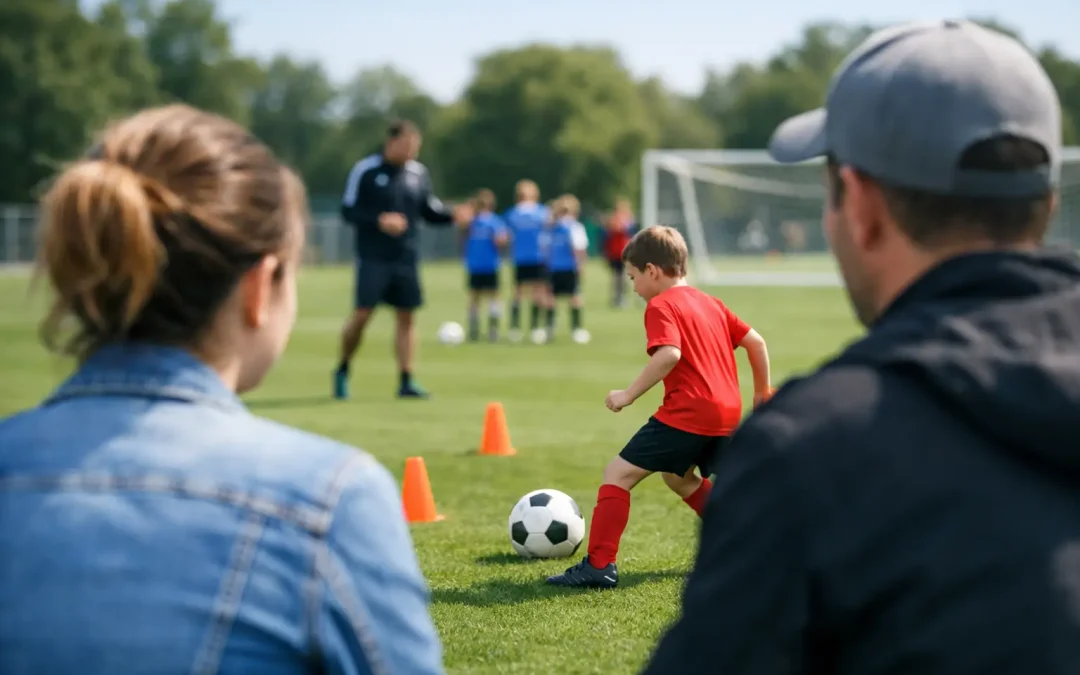
The night before a football trial, most kids are not worried about tactics boards or formations. They are wondering whether they will make a mistake, whether the coach will notice them, and whether they are good enough. That is why a strong parents guide to football trials matters. The right support can settle nerves, sharpen preparation, and help a young player walk in ready to compete rather than overwhelmed by the occasion.
For parents, trials can feel just as intense. You want to help, but not hover. You want your child to perform, but not carry extra pressure from the car ride alone. The goal is not to create a perfect trial day. The goal is to give your child the best possible platform to show their current level and compete with confidence.
What football trials are really assessing
Many parents assume trials are mostly about flashy moments – the goals, the stepovers, the big tackles. Coaches do notice match-winning actions, but strong selectors usually look wider than that. They are assessing whether a player can cope with the speed of the session, follow instructions, make decisions under pressure, and contribute to the team structure.
Technical quality matters, of course. First touch, passing weight, ball striking, receiving under pressure, and 1v1 ability all stand out quickly. But so do habits that are harder to fake. Does the player scan before receiving? Do they recover after losing the ball? Do they communicate? Do they switch on between drills? A trial often reveals football intelligence and mentality just as clearly as raw talent.
This is where some disappointment comes from. A child may feel they played well because they had a few exciting moments, while a coach may have concerns about positioning, work rate, or decision-making. That does not mean the player lacks ability. It means performance at trials is broader than highlights.
A parents guide to football trials starts with honest preparation
The best preparation is not panic training in the final week. It is steady development over time. Players who enter trials confidently usually have repeated good habits in place – quality touches, physical readiness, game understanding, and the confidence that comes from real repetition.
In the lead-up, parents should focus on controllables. Make sure your child is training consistently, sleeping properly, eating well, and arriving with enough football exposure in similar environments. If a player has only trained casually and then suddenly attends a high-level trial, the gap in tempo and intensity can feel massive.
There is also a difference between being busy and being prepared. Extra sessions can help, but only if they are purposeful. Position-specific work, first touch under pressure, scanning, finishing, and match tempo decision-making are more useful than endless unstructured kicking. Good coaching should build the complete player, not just tire them out before trials.
What to do in the week before the trial
The final week should be about sharpening, not overloading. Players need touches, movement, and confidence, but they do not need to arrive physically flat. If your child is carrying fatigue or soreness, more is not always better.
Keep training quality high and volume sensible. A light technical session, some ball work at tempo, and a focus on confidence can be enough. Sleep becomes especially important here. One late night may seem minor, but fatigue affects concentration, reaction time, and emotional control. Those small drops show up quickly in trial settings.
Equipment should be sorted early. Boots, shin pads, socks, shorts, training top, water bottle, and any registration details should be ready the day before. This sounds basic, but rushed mornings add stress that players carry onto the pitch.
Parents should also be careful with last-minute analysis. If your child already knows the basics, the night before is not the moment for a lecture on pressing triggers or body shape. Keep the message simple. Work hard, listen, compete, and play with courage.
Trial day: how parents can help without adding pressure
The car ride matters more than many people realise. Players often remember the emotional tone of the trip more than the exact words. If the message is all about selection, expectations, or comparison with others, nerves usually rise. If the message is calm and clear, players settle.
A good trial-day conversation is short. Remind your child to compete, enjoy the challenge, and respond positively to mistakes. One mistake never decides a trial, but a poor reaction to mistakes can shape how a coach sees the player.
Arrive early enough to remove panic from the routine. Rushing from the car park to check-in with one boot half-on is not ideal for focus. A few quiet minutes to settle, stretch, and observe the environment can help a player feel ready.
Once the session starts, your role changes. Support from the sideline should never become live coaching. Shouting constant instructions often confuses players and makes them play cautiously. Coaches want to see what the player understands and applies independently. Let the child own the trial.
What coaches usually notice first
First impressions form quickly, even before the game section begins. Coaches notice posture, energy, listening habits, and body language. A player who looks engaged, switched on, and ready to work starts well. A player who is distracted, slouched, or hesitant can put themselves behind before the football even starts.
Then the basics come into focus. Clean first touches, simple passing done well, movement off the ball, and urgency in transitions often stand out more than risky tricks. At stronger levels, selectors expect players to handle the simple moments consistently.
That does not mean your child should play safe and hide. It means they should show bravery with purpose. Take players on when it is on. Play forward when it is on. Compete physically when needed. But forcing actions to look impressive usually backfires.
If your child is nervous, that is normal
Nerves are not a sign that a player is unprepared. They usually mean the opportunity matters. The key is helping your child manage those nerves rather than fear them.
Breathing routines help. So does familiarity. If a player has trained in demanding environments before, trials feel less like a shock. This is one reason structured private or small-group development can be valuable before selection periods. Players build not only technique, but comfort under scrutiny and confidence in their habits. For families in Sydney, Clinical Football often works with players on exactly this type of trial readiness – technical sharpness, decision-making, position-specific detail, and confidence under pressure.
Parents can also normalise the experience. Instead of saying, “Don’t be nervous,” it is often better to say, “It’s normal to feel nervous. Start with the simple things and grow into it.” That gives the player a plan rather than a contradiction.
After the trial: the conversation that matters most
The post-trial chat can either support development or damage confidence. Timing matters. Some children want to talk straight away. Others need space. Read the moment.
Avoid opening with, “Do you think you made it?” or a full performance review in the car. Start with something steadier. Ask how they felt. Ask what they enjoyed. Ask what felt difficult. If they are frustrated, let them be frustrated before trying to fix it.
If the outcome is positive, keep perspective. Selection is an opportunity, not the finish line. If the outcome is disappointing, be careful not to turn one decision into a verdict on long-term potential. Football development is rarely linear. One coach may pass on a player who is then selected elsewhere six months later after physical growth, better confidence, or improved game understanding.
The most useful question is usually, “What can we learn from this?” Maybe your child needs more match fitness. Maybe they need stronger receiving skills, more confidence in duels, or better awareness off the ball. Specific feedback creates direction. Emotion alone does not.
A longer-term view always wins
A good parents guide to football trials should not only focus on getting through one session. It should help families think clearly about development. Trials are snapshots. They matter, but they do not define the whole player.
Children improve at different rates. Some stand out early because they are physically advanced. Others grow later and catch up fast once their confidence, speed, or strength improves. That is why the smartest approach is progression-based development. Build the technical base, improve tactical understanding, strengthen physical capacity, and keep confidence moving forward.
Parents who handle trials well usually do one thing consistently. They separate support from pressure. They expect effort, discipline, and commitment, but they do not make selection the only measure of worth. That balance gives young players room to compete freely and improve honestly.
When your child walks into a trial, they do not need perfect conditions. They need preparation, clarity, and the confidence that the people around them care about their growth, not just the result. That is often the difference between a player who tightens up and a player who gives a real account of themselves.