
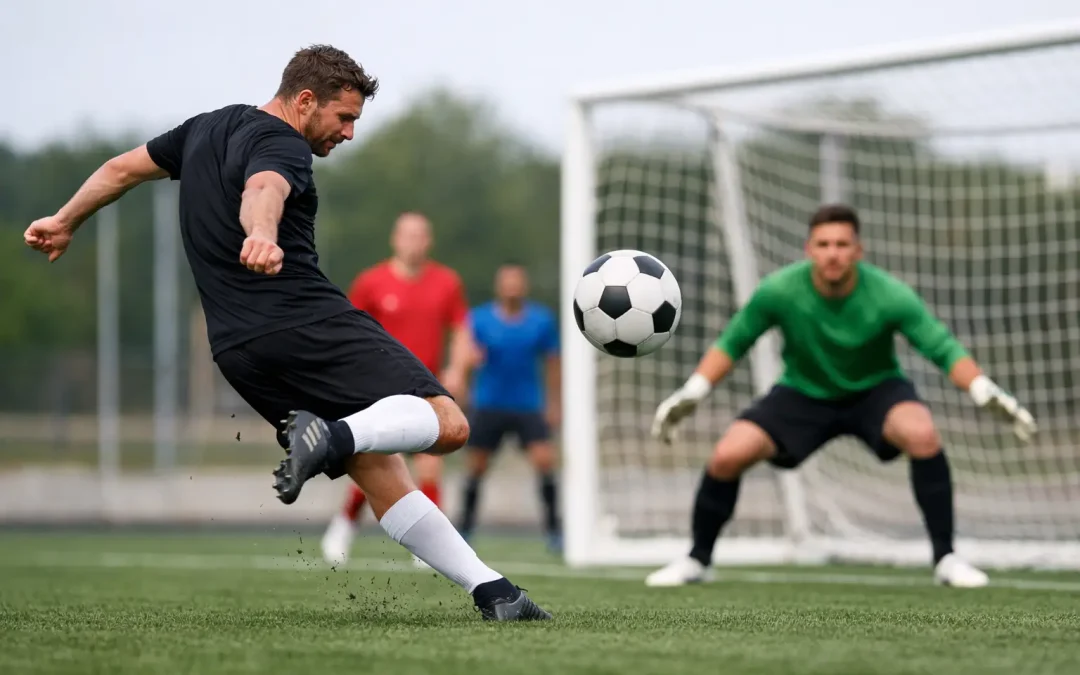
A striker can be quiet for 88 minutes and still decide a match with one action. That is why the best striker training exercises do not just build flashy finishing. They develop timing, movement, first touch, decision-making and the calm to execute under pressure.
For young forwards and ambitious players, this is where training needs to be specific. General team sessions matter, but strikers improve fastest when they work on the moments that define their position – receiving under contact, attacking space, finishing early and reacting quicker than the defender. Parents often see the outcome on match day, but the real progress comes from repeatable habits built in training.
What makes the best striker training exercises effective?
The strongest striker sessions look game-like. A forward rarely gets ten seconds to set the ball, pick a corner and strike without pressure. In matches, the picture changes quickly. The ball arrives from different angles, defenders recover fast, and the finish often has to happen in one or two touches.
That means a good exercise should train more than one quality at a time. It should challenge technique, but also scanning, body shape, timing and speed of action. It should also match the player’s stage of development. A nine-year-old striker needs repetition and confidence in front of goal. A teenage forward preparing for trials may need sharper work around movement patterns, pressing triggers and finishing from realistic service.
There is also a trade-off between volume and quality. Too many shots with poor habits can reinforce rushed technique. Too little repetition can slow confidence. The right balance depends on age, level and the purpose of the session.
1. First-touch finish in the box
This is one of the best starting points for striker development because it trains the most common scoring action in football – controlling a pass and finishing quickly inside the area. The server plays into the striker at different angles, and the striker must adjust body shape, take a clean first touch and finish before pressure arrives.
The detail matters. A heavy first touch pushes the ball into danger. A touch across the body can open the goal. Younger players should begin with simple service and a clear target. More advanced players should receive on the move, check away from a mannequin or defender, and finish with both feet.
This exercise builds confidence, but it also exposes technical gaps quickly. If a striker cannot secure the first touch, they cannot create the shot.
2. Double-movement runs for through balls
Many forwards run too early, too straight or without any disguise. A proper double movement teaches the striker to check short, unbalance the defender and then spin into space. The pass can be played along the ground or clipped into the channel depending on the age and level of the player.
This drill is valuable because it teaches timing rather than just speed. Fast players still get caught offside if they do not recognise the passing moment. Slower players can still be dangerous if they move cleverly.
For youth players, keep the focus on reading the passer and attacking the space with intent. For older players, add a recovering defender or a goalkeeper starting position to force better decisions. Sometimes the finish is early across goal. Sometimes it is a touch around the keeper. That variation makes the exercise more realistic.
3. One-touch finishing from cut-backs
A lot of goals come from balls pulled back from the byline or driven across the face of goal. Strikers who arrive in the right area and finish first time are difficult to stop. This exercise trains the habit of arriving late enough to separate from defenders but early enough to meet the service.
The key coaching point is body control. Players often snatch at the finish because they are moving too fast. Good strikers stay balanced and let the ball come into their path. The contact should be clean and purposeful, not hopeful.
This is also a strong exercise for wide players and strikers to combine. It develops the relationship between the crosser’s delivery and the striker’s movement, which is often missing in generic shooting drills.
4. Back-to-goal receiving and turning
Not every striker lives off space in behind. Sometimes the ball must stick. Receiving with back to goal, protecting possession and turning under pressure are essential for centre forwards, especially in tight matches where space is limited.
In this exercise, the striker receives a pass into feet with a defender behind or beside them. From there, they must decide whether to set the ball, roll the defender or create half a yard for a shot. The best version of this drill teaches decision-making, not just turning every time.
This is where physical strength and technique come together. Younger players do not need heavy contact, but they do need to learn how to use their body, arms and first touch to stay in control. Senior players need this work at high intensity because the pressure in real matches is immediate.
5. Reaction finishing after rebounds
Strikers score plenty of untidy goals. Rebounds, deflections and loose balls inside the area reward the player who reacts first. A rebound finishing exercise can start with a shot from outside the box, a save from the keeper, or a blocked attempt that spills into a new area.
This drill trains anticipation and mentality. The striker must expect the second chance before it happens. That habit separates poachers from players who admire their first effort and switch off.
It is also a reminder that good finishing is not always about power. On rebounds, composure is usually more valuable than force. A calm touch into space or a guided finish often beats a rushed swing.
6. Finishing under fatigue
A striker’s technique can look sharp in the first ten minutes of training. The challenge is preserving that quality when the legs are heavy. Finishing under fatigue prepares players for late-game moments, pressing actions and repeated sprints before a shot.
A simple format works well: short explosive movements, then immediate service for a finish. That could be a sprint around poles, a change of direction, or a quick pressing action before receiving the ball. The player then has to execute with clean technique despite elevated heart rate.
This exercise should be used carefully. If the fatigue level is too high, the technical quality can collapse and the session becomes messy. The goal is not to exhaust the player. It is to teach them to stay composed when tired.
Best striker training exercises for movement off the ball
Goals often begin before the striker touches the ball. Off-ball movement creates the chance, shifts the defensive line and opens space for teammates. Some of the best striker training exercises therefore focus on scanning, checking shoulders and choosing the right run.
A practical way to train this is with multi-gate movement patterns. The striker starts central, scans for the coach’s cue, then attacks one of several spaces based on the signal or the server’s body position. This forces the player to read information instead of making a pre-planned run.
That matters for developing game intelligence. Young players often improve quickly once they realise movement is not just about working hard. It is about moving with purpose.
7. Near-post and far-post finishing patterns
Inside the box, detail wins. Strikers need to understand when to attack the near post, when to hold for a far-post finish and when to delay for a cut-back. Pattern work around these movements helps players build that awareness.
The exercise usually starts with wide service from either side. The striker makes a specific run, then finishes according to the delivery. Over time, the server can vary the ball and the striker must adjust. This stops the drill becoming robotic.
For developing players, this exercise builds confidence in common scoring areas. For advanced players, it sharpens the instinct to separate from markers in crowded spaces.
8. Small-sided finishing games
Some of the best striker training exercises do not look like classic shooting drills at all. Small-sided games with end zones, target goals or bonus points for one-touch finishes can create repeated striker moments while keeping pressure and realism high.
This format is especially useful because it blends technique with decision-making. The striker must choose whether to shoot, combine, press or hold the ball. It also exposes habits that isolated drills can hide. A player may finish well unopposed but struggle to create shooting space when defenders are live.
For coaches and parents, this is where progression becomes visible. A striker who starts to move smarter, demand the ball and finish with more conviction is transferring training into the game.
9. Weak-foot finishing circuits
A striker who can only finish confidently on one side becomes predictable. Weak-foot work is often avoided because it feels uncomfortable, but that discomfort is part of development. A simple circuit of short passes, angled finishes and first-time strikes on the weaker foot can make a major difference over a season.
The standard should stay high. Players should not be told that any contact is good enough just because it is the weaker foot. Technique still matters – eyes on the ball, balanced body position and a clear target.
Over time, this work expands options in the box. It gives the striker an extra half-second because they do not need to shift the ball onto the preferred side.
How often should strikers train these exercises?
It depends on age, match load and the player’s current needs. A younger striker may benefit from one or two focused finishing sessions each week alongside team training. An older player in a competitive environment may need more position-specific work, but not at the cost of recovery.
Quality beats quantity. Ten sharp repetitions with feedback can be more valuable than fifty rushed shots. Structured individual coaching can help here because the session can target the exact gaps holding the player back, whether that is composure, movement or finishing variety.
The best forwards are not built by random shooting practice. They are developed through focused repetition, honest coaching and drills that reflect real match demands. When a striker trains the right actions consistently, confidence grows because performance grows with it. Keep the work specific, keep the standard high, and the goals tend to follow.