
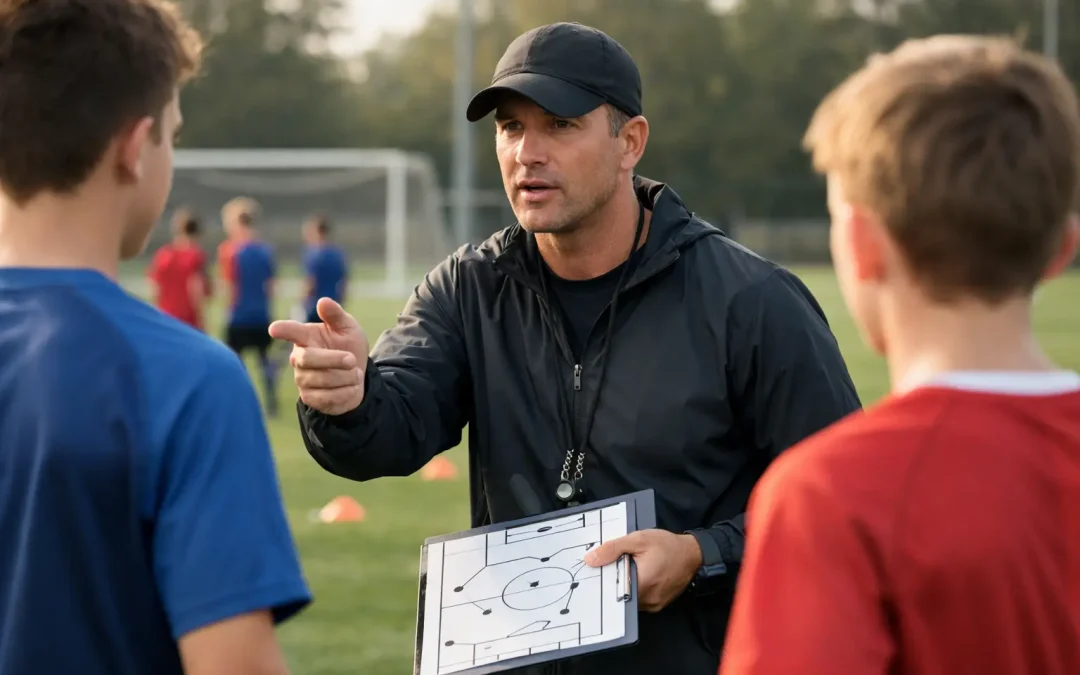
Representative trials are rarely won on talent alone. Players are judged quickly, often in unfamiliar groups, with limited touches and little margin for hesitation. That is why working with a football coach for representative trials can make a real difference. The right coaching does not just sharpen technique – it prepares a player to show their strengths clearly, stay composed under pressure, and make better decisions when selectors are watching.
For many families, representative football feels high stakes. There is excitement, but there is also uncertainty about what selectors want, how to prepare properly, and whether normal team training is enough. In most cases, it is not. Team sessions are designed around squad outcomes. Trial preparation needs to be built around the individual player.
What a football coach for representative trials should actually do
A quality trial coach is not there to run players until they are exhausted or overload them with flashy drills. The job is to prepare the player for the demands of the trial itself. That means identifying what the player already does well, what could limit them on trial day, and how to improve both in a structured way.
For one player, the issue may be technical speed under pressure. For another, it may be body shape when receiving, scanning habits, defensive positioning, or a lack of confidence in 1v1 moments. A good coach looks beyond effort and focuses on the actions that help a player stand out for the right reasons.
That is especially important in representative environments, where selectors often notice clarity. They want to see players who can receive cleanly, move the ball with purpose, defend their position properly, compete physically, and make sensible decisions. Players do not need to force the game. They need to show they understand it.
Why representative trial prep is different from regular training
Regular club training matters, but it does not always mirror trial conditions. In a trial, a player may have twenty minutes to make an impression. They may be placed with unfamiliar teammates, shifted into different positions, or asked to perform in a fast, direct style that does not suit what they are used to.
This is where targeted preparation helps. Trial-specific coaching should work on first impressions, game speed, communication, transitions, and decision-making in crowded moments. It should also prepare players mentally. Some athletes train well all season, then freeze when the stakes rise. Others try too hard and play outside themselves. Both are common.
A coach with experience around player development and trial environments can help remove that uncertainty. Instead of guessing what to work on, the player follows a plan linked to how they will be assessed.
The key areas a coach should build before trials
Technical quality is still the base. Clean first touch, passing accuracy, striking technique, and ball control under pressure all matter because they are immediately visible. Selectors notice players who look comfortable and efficient. Heavy touches, rushed passes, and poor balance can quickly work against a player, even if their overall potential is strong.
Tactical understanding is just as important. A representative player must recognise space, press at the right time, recover into shape, and understand their role without needing constant instruction. Position-specific coaching can be especially valuable here. A winger, centre-back, central midfielder, and goalkeeper are judged through different actions. Generic training can help, but trial preparation becomes stronger when it reflects the demands of the player’s position.
Physical readiness also plays a part, although it should be approached sensibly. Trial preparation is not about turning every session into conditioning. It is about making sure the player can repeat sharp actions, compete in duels, and maintain concentration as fatigue builds. Movement quality, speed over short distances, and balance in contact moments often matter more than simply running more.
Then there is confidence. Not empty confidence, but the kind that comes from preparation. Players perform better when they know what they are trying to show. They move with more intent, communicate more clearly, and recover faster from mistakes. Confidence is built through repetition, clarity, and honest coaching.
How a football coach for representative trials builds confidence
Confidence grows when players see progress in specific areas. If a defender improves their timing in 1v1s, they stop diving in. If a midfielder learns to scan earlier, they receive the ball with more composure. If an attacker sharpens movement before the ball arrives, they create better moments naturally.
This matters because trial nerves often come from uncertainty. A player who is unsure of their first touch, role, or decision-making tends to rush. A player who has been coached through match-realistic situations tends to stay calmer. They trust their habits.
Good coaching also changes how players respond to mistakes. At trials, one misplaced pass can feel massive. But selectors usually look at the next action as well. Does the player switch off, or recover quickly? Do they hide, or demand the ball again? Coaches should train that response so players remain engaged instead of shrinking after an error.
What parents should look for in trial coaching
Parents do not need a coach who makes big promises about selections. No honest coach can guarantee outcomes. What they should look for is structure, clarity, and individual attention.
A strong coaching environment should begin with an assessment of the player. Where are they now? What are the main strengths? What could stop them performing at their best in a representative setting? From there, training should be purposeful rather than random.
Parents should also expect communication that is direct and realistic. Some players need short-term trial prep. Others need a longer runway because their fundamentals are still developing. That does not mean they cannot reach representative level. It means the coaching should match the player’s stage, not just the calendar.
For families in Sydney, this is often where private coaching or small group work has real value. It allows players to train with more touches, more feedback, and more detailed correction than they typically get in a full team session. At Clinical Football, that player-centred approach is a big part of helping athletes prepare with confidence and purpose.
Signs a player may benefit from extra trial preparation
Some signs are obvious. A player has an upcoming rep trial and wants to be ready. Others are more subtle. They might perform well at club level but struggle when the pace lifts. They may have strong technical ability but disappear in selection games. Or they may be returning from a setback and need confidence rebuilt before stepping into a competitive trial environment.
Extra preparation can also help players who are between levels. These are often the athletes closest to selection, but not yet consistent enough. A small improvement in scanning, speed of play, defensive habits, or communication can shift how they are perceived.
That is the value of individualised coaching. Margins are often small. The goal is not to change everything. It is to improve the details that selectors notice most.
Trial preparation should be honest, not overhyped
There is no perfect formula for making a representative team. Standards vary by age group, league, and region. Some trials favour physically mature players. Others reward technical control and football intelligence. It depends.
That is why preparation should be balanced. Players need technical work, but also game understanding. They need confidence, but also accountability. They need encouragement, but they also need clear feedback about what must improve.
The best coaching does not fill players with pressure. It gives them a framework. Arrive fit. Understand your role. Communicate. Compete. Use the ball well. Recover quickly from mistakes. Show who you are through your actions.
For young players especially, representative football should be part of a longer development journey, not the whole story. Missing one trial does not define a player. Making one squad does not mean the work is done either. Progress in football is rarely linear.
A well-prepared player goes into trials with more than hope. They go in with habits, clarity, and a better chance of performing at the level they are capable of. That is what the right coach should provide – not hype, but genuine readiness for the opportunity in front of them.
The strongest trial performances usually look simple from the outside. Good decisions, good habits, good timing. That simplicity is built through focused work, and for many players, that is where the right coaching changes everything.