
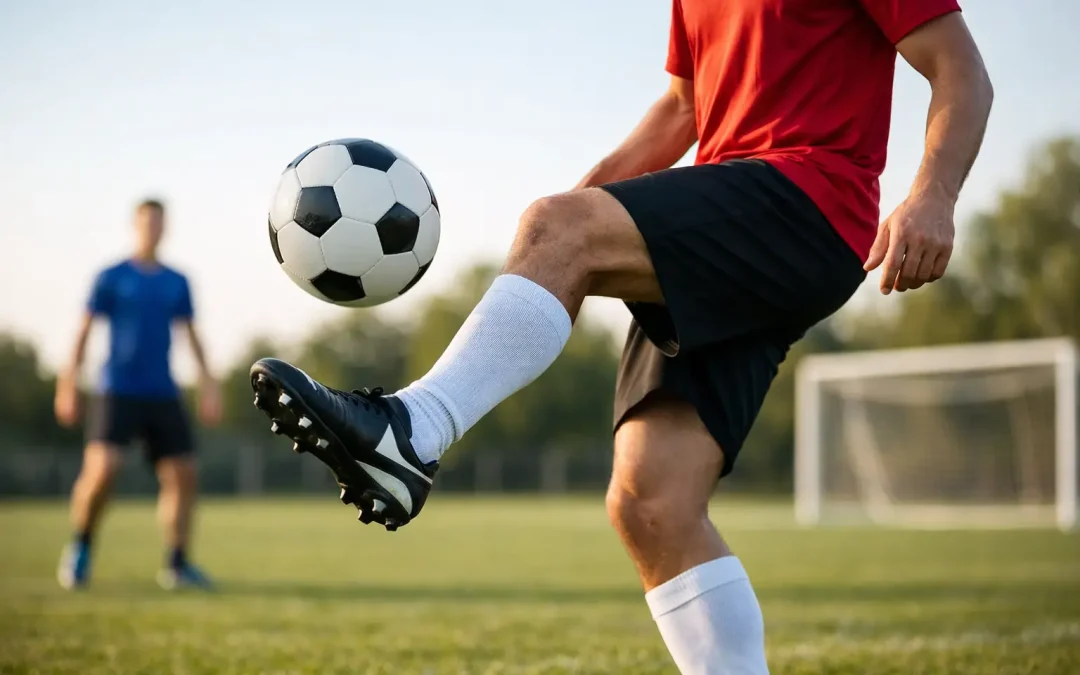
A heavy first touch changes everything. It turns a good pass into a 50-50, closes off your next action and gives defenders time to recover. If you want to know how to improve first touch football skills, start by treating your first touch as a decision, not just a contact. The best players do not simply stop the ball – they move it into space, protect it, or set up the next pass, dribble or shot.
For young players, first touch is often the difference between looking rushed and looking composed. For parents watching from the sideline, it is one of the clearest signs of development. A player with a clean first touch plays with more confidence, keeps possession more often and handles match pressure better. That is why first touch deserves focused training, not just repetition without purpose.
Why first touch matters so much
In football, time and space disappear quickly. A strong first touch gives you both. It helps you escape pressure, open your body, play forward earlier and stay balanced for the next action. Poor control does the opposite. It forces recovery touches, slows the game down and often leads to panic decisions.
This matters at every level. Beginners need first touch to enjoy the game and feel in control. Academy and representative players need it because the speed of play is higher and mistakes are punished faster. Senior players need it because one clean touch can be the difference between keeping possession and turning the ball over in a dangerous area.
There is also a confidence factor. When players trust their touch, they ask for the ball more often. They scan more, play with their head up and make better choices. Technical quality and confidence grow together.
How to improve first touch football in the right way
A lot of players try to improve first touch by doing hundreds of random touches. Repetition helps, but only if the detail is right. First touch improves fastest when players work on body shape, scanning, surface selection and direction of control.
The first habit is to scan before the ball arrives. You need to know where the space is, where the pressure is coming from and what you want to do next. Without that information, even a technically clean touch can take you into trouble. Players who look early usually control the ball with more purpose.
The second habit is body position. Receiving side-on gives you more options than receiving square. You can see more of the pitch, protect the ball more effectively and play forward sooner. Young players often stand flat and then need extra touches to adjust. Good first touch starts before the ball reaches you.
The third habit is choosing the right surface. Inside of the foot is common and reliable, but it is not the only answer. Sometimes the outside of the foot helps you escape pressure faster. The sole can be useful in tight areas. The instep may be needed when receiving firm passes. The key is not using one surface for everything. It is selecting the one that fits the situation.
The coaching details that make a big difference
Relaxed feet and soft contact matter more than most players realise. If the foot is tense and rigid, the ball often bounces away. Think about cushioning the ball rather than stabbing at it. You are absorbing pace and guiding the ball where it needs to go.
Your first touch should also have a purpose. Sometimes that purpose is simple security – take it away from pressure and keep possession. Other times it should break a line, shift the defender or set up a shot. Not every touch should be large or aggressive. It depends on the moment, your position and the pressure around you.
Distance is another important detail. If your first touch stays under your feet, you may not create enough space for the next action. If it is too heavy, you invite a challenge. The right distance depends on what comes next. A midfielder under pressure may need a tight touch to protect the ball. A winger attacking space may need a bigger touch to drive forward.
Training drills that actually help
Wall work remains one of the best ways to improve first touch because it gives players constant repetition and immediate feedback. But it needs structure. Do not just pass and trap on autopilot. Receive across the body. Alternate feet. Change the surface. Add a scan before each pass. Take one touch to set and one to play, then progress to one-touch patterns where appropriate.
Cone gates are useful because they teach direction. Set up a small gate a few metres to either side of your starting point. Pass the ball from a wall or from a partner, then use your first touch through one of the gates. This encourages players to move the ball with intent instead of simply stopping it.
Tight-area receiving drills are important for players who struggle under pressure. Work in a small square with a partner or coach feeding passes from different angles. Receive on the back foot when possible, adjust quickly and play out. As players improve, reduce time and space. The goal is not just clean contact. It is calm control when the picture changes quickly.
For younger players, the drill must still be enjoyable. Add targets, points or small competitions. The standard should stay high, but engagement matters. Players learn faster when they stay switched on.
Match-realistic ways to build first touch
The biggest mistake in first-touch training is removing all pressure for too long. Technique needs isolated practice, but eventually players must receive while moving, scanning and reacting. Football is not played from a standing start.
That is why opposed drills matter. Add passive pressure first, then active pressure. Let defenders close from different angles. Ask the receiving player to solve different problems: protect, turn, bounce the pass, or play forward first time. These situations build touch quality and decision-making together.
Position-specific work also helps. A central midfielder may need to receive on the half-turn under pressure behind them. A striker may need to pin a defender and secure a direct pass. A fullback may need to take the first touch down the line or inside depending on the press. First touch is not one skill. It changes with the role and the moment.
This is where individual coaching often accelerates progress. In a structured environment, players get immediate correction on details that are easy to miss in team sessions – body shape, timing, scanning habits and the quality of the first movement before contact.
Common reasons players struggle
Some players are not scanning early enough. Others watch the ball the whole way and forget what is around them. Some receive flat-footed, which limits their options. Others try to kill every ball dead when they should be guiding it into space.
There is also a rhythm issue. Players often rush because they feel pressure before it arrives. They snatch at the ball instead of trusting their shape and technique. On the other hand, some players take too long and invite pressure. Good first touch sits between those extremes. It is composed, but not slow.
Physical factors can play a role as well. Balance, coordination and mobility all affect how well a player can adjust to awkward passes. Younger players especially benefit from training that develops movement quality alongside technical work.
What players and parents should focus on week to week
Improvement comes from consistency. Ten focused minutes several times a week will usually help more than one long, unfocused session. Players should aim to train both feet, receive from different angles and challenge themselves with realistic tempo.
Parents can support development by looking beyond highlights. A strong first touch is not flashy, but it shows up every few seconds in a match. Notice whether your child is receiving calmly, playing their next action earlier and asking for the ball more often. Those are real signs of progression.
For ambitious players, quality feedback matters. You cannot always feel what is going wrong on your own. A coach who can identify small technical errors and connect them to match performance can save months of trial and error. At Clinical Football, that kind of detailed, progression-based coaching is exactly what helps players turn training habits into match-day confidence.
How long does it take to improve first touch football?
It depends on the player, the starting point and the quality of the training. Beginners can make visible progress in a few weeks if they train consistently and correctly. Advanced players may improve more gradually because the margins are smaller, but the impact is still significant. One sharper touch under pressure can change a whole phase of play.
The important thing is not chasing perfect touches in easy drills. It is building a first touch that holds up in real football – when the pass is awkward, the defender is close and the next decision matters.
Train your first touch with intent, and the rest of your game starts to open up. You will find more time, more composure and more belief on the ball, which is exactly where better football begins.