
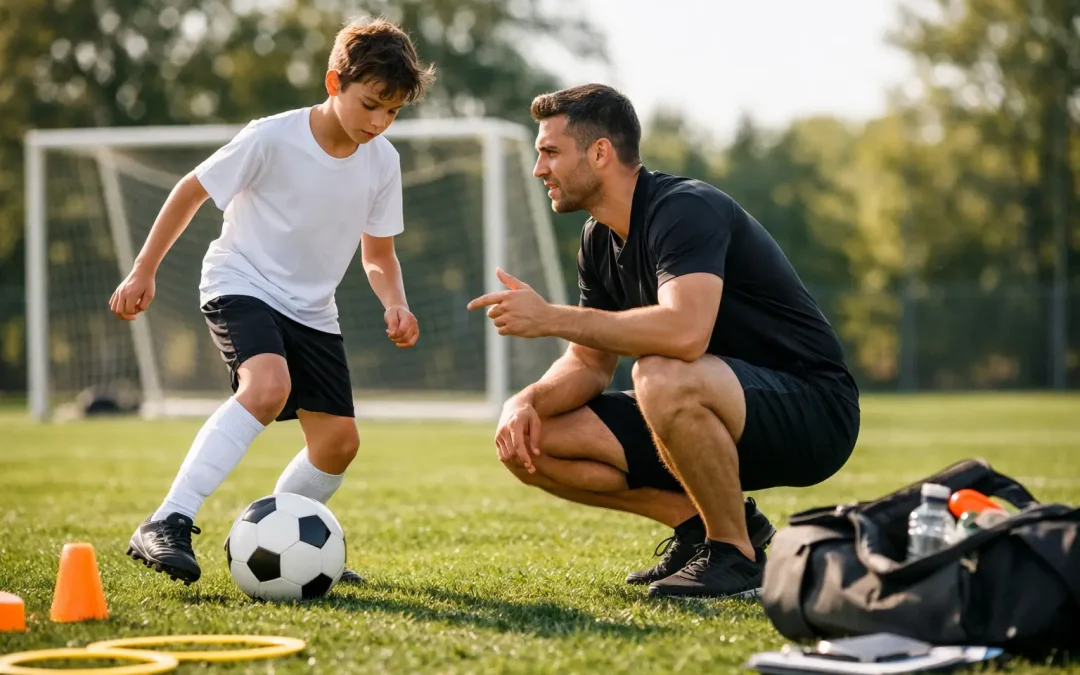
A player can spend months in team training and still keep making the same mistake – a heavy first touch under pressure, poor body shape when receiving, or hesitation in one-on-one moments. That is where private football coaching benefits become clear. When training is built around one player, improvement stops being general and starts becoming specific, measurable and much faster.
For parents, that matters because time and money need to lead somewhere. For players, it matters because confidence usually follows competence. If a session targets the exact areas holding a player back, progress becomes easier to see on the pitch.
Why private football coaching benefits stand out
Team training has an important role. Players need to learn systems, combinations, communication and how to compete within a squad. But in most club environments, a coach is managing a group, not one individual. Even in a strong session, there is only so much time available to correct one player’s technique, decision-making or movement.
Private coaching fills that gap. It gives players focused repetition, immediate feedback and a development plan that matches their age, level and goals. That could mean helping a beginner build clean passing technique, supporting a teenager preparing for trials, or sharpening a senior player’s positional details before the season starts.
The main advantage is not simply more training. It is better-targeted training. A player is not working through random drills. They are addressing the habits, weaknesses and strengths that actually affect match performance.
Faster technical improvement
One of the biggest private football coaching benefits is technical development. In a one-on-one setting, the coach can slow things down, correct details and then build the speed back up. That process is hard to achieve in a larger team session where the focus has to stay on the whole group.
Technical improvement often comes from small adjustments. The angle of the standing foot. The timing of the first touch. The shape of the body before receiving. The quality of a pass across different distances. These details matter because football is a game of margins. A better first touch can create an extra second. An extra second can change the entire action.
For younger players, private coaching can help establish strong fundamentals early. For advanced players, it can sharpen technique under pressure and at match speed. Both are valuable, but the approach should be different. Good private coaching recognises that development is not one-size-fits-all.
Confidence built on real progress
Confidence is often spoken about as if it appears on its own. In reality, most players gain confidence when they feel prepared. If they know they can receive cleanly, turn under pressure, strike the ball properly and understand their role, they play with more belief.
This is where individual coaching can have a strong impact. A player who has struggled in team matches may only need a few targeted sessions to understand what is going wrong. Once the issue is identified and trained properly, their mindset changes. They stop second-guessing themselves and start playing with intent.
That is especially important for children and teenagers. One poor patch of form or one tough season can affect how they see themselves as players. Private training gives them a chance to rebuild from a position of support, structure and positive accountability.
Position-specific development
Not every player should train the same way. A central midfielder needs different habits from a striker. A fullback faces different decisions from a centre back. Goalkeepers require specialist work that general team sessions often cannot fully cover.
Private coaching allows training to reflect the player’s actual role on the pitch. That means working on the movements, scanning habits, receiving angles, defensive actions and technical demands that suit their position. Position-specific work helps players become more effective in games because the training is connected to real football situations, not just generic exercise.
This can be a major advantage for players moving into more competitive environments. At higher levels, coaches are looking for players who understand their role, make good decisions and execute consistently. A player who trains specifically for their position is usually better prepared to meet that standard.
Better tactical understanding
Many players work hard but still struggle to influence matches because they do not fully understand space, timing or game moments. Private coaching can improve football intelligence by breaking the game down into clear, practical pieces.
That may include when to play forward and when to retain possession, how to support from the right angle, how to press effectively, or how to recognise the right moment to run beyond the line. These are not just coaching buzzwords. They are habits that help players make better decisions under pressure.
Tactical learning is often stronger when it is linked directly to the player’s own footage, match experiences or position. Instead of broad advice, they get coaching that answers real questions from their games. That makes learning easier to apply on the weekend.
Match readiness and trial preparation
There are periods when players need more than steady improvement. They need to be ready. Club trials, representative programs, academy opportunities and pre-season blocks all place extra pressure on performance.
Private coaching is valuable in these moments because it can be planned around a short-term objective without losing sight of long-term development. Sessions can focus on sharpness, intensity, decision-making, conditioning with the ball and the specific qualities selectors tend to notice.
That said, trial preparation should not become rushed or unrealistic. A few sessions can help a player present themselves better, but lasting results still come from consistent work. The best private coaching improves readiness without promising shortcuts.
A clear development plan
Another reason families value private training is clarity. In team settings, players often receive feedback in small pieces. They might hear that they need to be quicker, stronger or more composed, but not what to do next.
Private coaching can turn vague feedback into a real plan. A player might need to improve first touch under pressure, increase weaker foot confidence, sharpen change of direction, or become more disciplined out of possession. Once priorities are clear, training becomes more productive.
This structure also helps parents understand what their child is working on and why. That matters because development is easier to support when the pathway is visible. Instead of hoping improvement happens, families can see progression over time.
Private coaching works best with team football, not instead of it
Private training is highly effective, but it is not a replacement for playing with and against others. Match experience, team communication and understanding collective tactics still come from club football and regular game exposure.
The strongest model is usually a combination. Team training gives players the game context. Private coaching sharpens the individual details that influence how well they perform in that context. Used together, they create a stronger development environment.
This is also where the quality of the coach matters. Good private coaching should support the player’s broader football journey, not compete with it. The aim is to develop a more complete player who can transfer training gains into matches, trials and season performance.
Which players benefit most?
Private coaching can suit a wide range of players, but the reasons vary. Beginners often benefit from learning the game properly from the start. Developing players may need extra repetition and confidence-building. Advanced youth players often need position-specific refinement and match preparation. Senior players may look for sharpness, detail and accountability.
It also depends on personality. Some players thrive in a group and simply need occasional individual support. Others improve dramatically when the session is centred entirely around them. There is no single rule, which is why assessment and honest coaching matter.
For football-focused families in Sydney, the key question is not whether private coaching sounds impressive. It is whether the training is specific, progressive and led by someone who understands player development at different stages. In the right environment, private coaching does more than improve technique. It helps players train with purpose, compete with confidence and move closer to the level they are aiming for.
At Clinical Football, that is the standard serious players and families should expect. The right coaching does not just keep a player busy. It gives their effort direction, and that is often where real progress begins.