
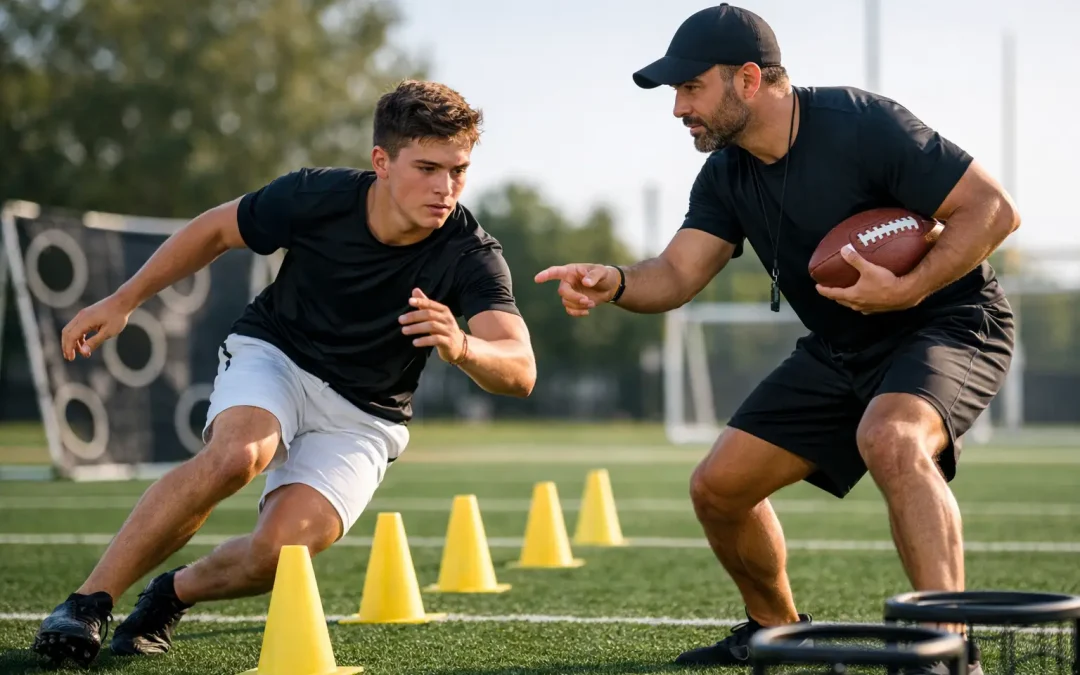
A player can spend years in team training and still avoid the exact areas holding them back. It might be a first touch under pressure, weaker foot passing, positioning off the ball, or the confidence to take responsibility in matches. That is where private football training changes the picture. It gives players focused coaching built around their game, their goals, and their stage of development.
For many families in Sydney, the challenge is not finding football. It is finding the right football environment. Team sessions matter, but they are designed for the whole squad. A coach has limited time, different ability levels to manage, and a match plan to prepare. Individual improvement can get lost in that setting, especially for younger players who need extra technical repetition or older players pushing for trials, representative selection, or stronger match performance.
Why private football training works
Private football training works because it removes guesswork. Instead of repeating generic drills, the player trains with purpose. Sessions can be shaped around technique, game understanding, movement patterns, physical output, and confidence in real football situations.
That individual attention matters at every age. A beginner may need simple ball mastery, coordination, and comfort on the ball. A youth player may need sharper scanning, quicker passing decisions, and cleaner receiving angles. A senior player may need position-specific detail, match fitness, and consistency under pressure. The training looks different because the player is different.
This is one of the biggest advantages of one-on-one coaching. Progress is easier to measure when the session starts with a clear objective. If the goal is improving finishing, the coach can correct body shape, first touch, timing, composure, and shot selection in one session. If the goal is defending, the work can focus on footwork, timing of the tackle, body orientation, and reading cues earlier. Every minute serves a purpose.
What players actually improve in private football training
The biggest gains usually come from four areas working together rather than one in isolation.
Technical quality
Most players know when their technique is letting them down. The ball gets stuck under the feet, the pass arrives too slowly, or the first touch takes them away from the next action. In a private setting, these details can be corrected quickly because the coach sees every repetition and can adjust the standard immediately.
That includes dribbling, turning, receiving, passing, striking, heading, and finishing. It also includes the details many players overlook, such as body position before receiving, balance on contact, and the quality of the first step after the touch. These small corrections build habits that carry into match day.
Tactical understanding
Good football is not only about execution. It is about choosing the right action early enough. Private training can develop scanning, awareness, movement between lines, defensive positioning, pressing triggers, and decision-making in different areas of the pitch.
This matters even more for ambitious players moving into stronger football environments. Once the level rises, athletic effort alone is not enough. Players need to understand space, timing, and their role within a game model. Position-specific coaching is valuable here because the demands on a centre-back are different from those on a winger or holding midfielder.
Physical output
Private football training is not a replacement for full team conditioning, but it can improve football-specific movement. Acceleration, deceleration, agility, repeat efforts, balance, and coordination all affect performance. Younger players benefit from learning how to move well. Older players benefit from training those movements with intensity and intent.
The right physical work supports technical quality rather than competing with it. A player who can get into position faster, stay balanced, and repeat high-quality actions will naturally look more composed.
Confidence and mentality
Confidence is often treated as something that appears on its own. In reality, it usually comes from preparation. Players become more confident when they know they have worked on the exact moments they face in matches.
A shy younger player may start asking for the ball more often. A teenager preparing for trials may look more settled because they have trained under pressure and know what they are trying to show. Confidence built through repetition and correction is more reliable than empty encouragement.
Who benefits most from private football training?
The short answer is almost any player, but the reason will vary.
Beginners benefit because private sessions can build proper foundations early. That means learning technique, movement, and game habits correctly before poor habits settle in. For parents, this often brings peace of mind. Their child is not just staying busy. They are learning the game properly.
Developing youth players benefit because growth is rarely even. One player may be physically ahead but technically raw. Another may read the game well but struggle in one-on-one moments. Individual coaching helps close those gaps without waiting for them to sort themselves out during team training.
Advanced youth and senior players benefit because margins become smaller at higher levels. Selection decisions often come down to consistency, speed of play, tactical discipline, and reliability in key moments. Those are exactly the areas private sessions can sharpen.
Goalkeepers also benefit in a slightly different way. Their role is so specialised that generic team sessions often do not provide enough focused repetition. Handling, footwork, diving technique, distribution, positioning, and decision-making all need deliberate work.
What to look for in a coach
Not all private football training offers the same value. A session can be intense without being effective, and technical without being relevant to the player’s real match demands.
The best coaching starts with assessment. A good coach should be able to identify where the player is now, where they want to get to, and what needs to happen in between. That sounds simple, but it is where many programmes fall short. Without a progression-based plan, sessions can become random.
Coaching background matters as well. Experience in the game helps, but so does the ability to teach. Players need correction they can understand, standards they can follow, and sessions that challenge them without overwhelming them. Families should also look for clear communication, consistency, and an environment that balances discipline with encouragement.
For players serious about progressing, it helps to work with a coach who understands both grassroots development and higher-level expectations. That bridge is important. A young player does not just need more touches. They need direction.
Private football training and team training are not the same thing
Some parents worry that individual coaching might replace team football. It should not. The best results usually come when private work supports what happens at club level.
Team training develops chemistry, match awareness in full game contexts, and understanding within a squad. Private work sharpens the individual tools a player brings into that environment. One gives context. The other builds precision.
That balance matters. Too much isolated training without match application can limit transfer. On the other hand, relying only on team sessions can leave technical weaknesses exposed for too long. The strongest development model usually combines both.
How often should a player train?
It depends on age, goals, recovery, and current football load. A younger player new to coaching may improve significantly with one quality private session each week alongside club football. An older player preparing for trials or pushing through a competitive season may need more targeted work, especially in short blocks.
More is not always better. The quality of repetition matters more than simply adding sessions. Players still need recovery, school balance, and time to absorb what they are learning. Good coaching takes the long view. It builds progression without burning the player out.
For that reason, structure matters more than volume. A player should know what they are working on, why it matters, and how progress will be judged over time.
A smarter pathway for player development
Private football training is most effective when it fits into a wider development pathway. That may include one-on-one coaching, small group sessions, team training, holiday programmes, goalkeeper work, or position-specific support depending on the player’s needs.
That layered approach gives players both attention and challenge. One-on-one sessions allow deep correction. Small groups add pressure and competition. Team environments test whether those improvements hold up in real football situations.
This is where a serious coaching environment makes a difference. At Clinical Football, the focus is not on keeping players busy. It is on helping them improve with clear intent, strong standards, and coaching that matches their stage of development.
The right private training should leave a player better equipped each week – sharper on the ball, clearer in decision-making, stronger in confidence, and more prepared for the opportunities ahead. That is what families are really investing in. Not just extra sessions, but meaningful progress that shows up when the match starts.