
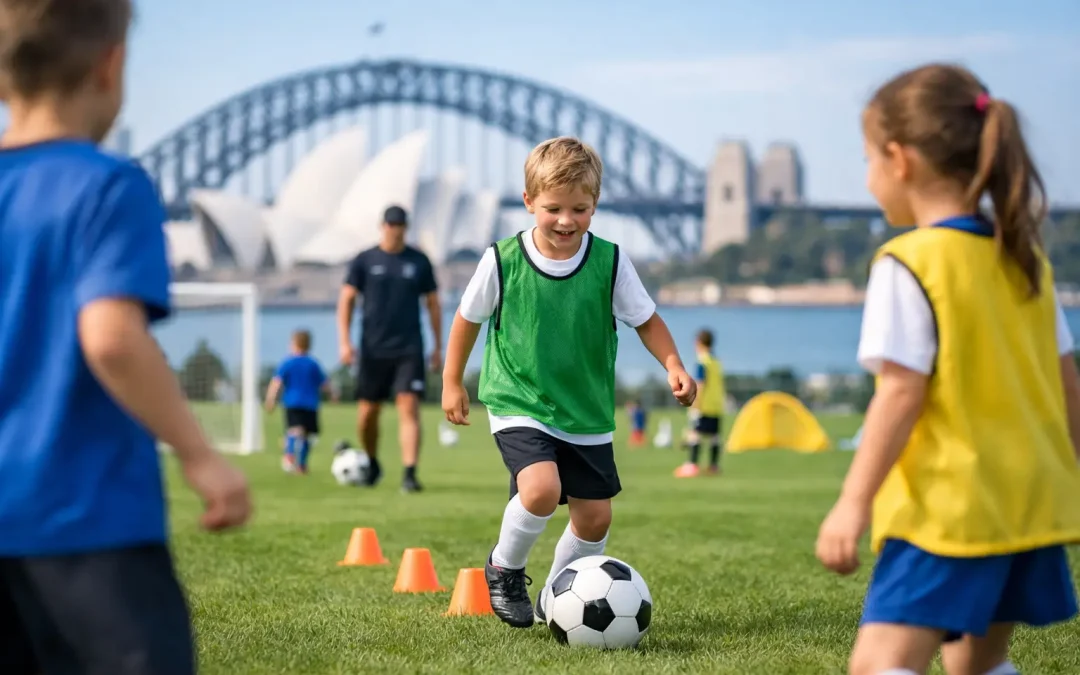
Not all junior football training is equal. Some sessions keep kids busy for an hour. The best football sessions for kids do far more than that – they build technique, confidence, decision-making and a genuine love of the game while giving parents a clear sense of progress.
For families in Sydney, the challenge is not finding football at all. It is finding coaching that actually matches a child’s stage, personality and goals. A five-year-old who is still learning how to move with the ball needs a very different environment from a 13-year-old preparing for trials or a young goalkeeper trying to sharpen reaction speed and positioning. When sessions are chosen well, players improve faster and enjoy the process more. When they are not, development can stall.
What makes the best football sessions for kids?
The strongest sessions are built around progression. That means every activity has a purpose, the coaching has structure, and the player is being challenged at the right level. Good coaching is not just about high energy or lots of touches. It is about knowing what the player needs now, what comes next, and how to help them improve without overwhelming them.
For younger players, that often means sessions focused on coordination, ball mastery, balance and confidence in one-versus-one situations. For older or more advanced players, the best work usually combines technical detail with tactical understanding, speed of decision-making and position-specific habits. A player can look sharp in a generic drill, but football is a game of pressure, timing and awareness. Strong sessions train those elements, not just isolated technique.
Parents should also look at how a coach communicates. Kids respond best when expectations are clear and encouragement is genuine. Serious development does not require shouting or making players feel small. It requires standards, repetition and coaching that helps players understand what they are doing well and what needs attention.
Choosing the right football session for your child
There is no single answer to the best football sessions for kids because it depends on age, experience and ambition. The right format for one player may be the wrong fit for another.
One-on-one coaching
Private coaching is often the fastest way to improve specific parts of a child’s game. The major advantage is attention. Every minute is built around that player’s needs, whether that is first touch, striking technique, weaker foot development, agility, confidence on the ball or preparing for trials.
This format is especially effective for players who want measurable progress in a shorter period. It also suits children who may lack confidence in larger groups or who need extra support to break through a plateau. The trade-off is that private training does not replace the decision-making and chaos of match play, so it works best when paired with team football or small-sided sessions.
Small group sessions
For many children, small group training offers the best balance. Players still receive close coaching, but they also work with pressure, competition and realistic game moments. Passing combinations, scanning, pressing, movement off the ball and decision-making all improve more naturally when there are other players involved.
Small group sessions are often ideal for children who already have some basics and are ready to sharpen their football intelligence. They also help players learn to communicate, compete and adapt. If the groups are too large or too mixed in ability, though, quality can drop quickly. Group size matters.
Larger group coaching
Larger sessions can be excellent for fitness, repetition and enjoyment, especially for beginners who need confidence and exposure to the game. They can create a strong social environment and help younger kids stay engaged.
The downside is that individual correction is more limited. A player with a technical weakness may be able to hide in a big group, and a coach may not have enough time to address the detail that leads to real improvement. These sessions are often a good starting point, but not always enough on their own for ambitious players.
Team training
Club or team sessions are important because they teach shape, combinations, pressing triggers and match roles. Kids need to learn how their individual ability fits into a collective game model.
Still, team training usually serves the team first, not the individual. If a child needs work on receiving under pressure, turning out, striking cleanly or defending one-versus-one, that may not get enough attention in a standard team environment. That is why many families combine team training with private or small group development.
What parents should look for in quality coaching
A session can look busy without being effective. The signs of quality are usually clearer after a few weeks than after one class.
Look for coaching that has a plan. Players should not be doing random drills with no link between them. There should be a clear focus, whether that is dribbling under pressure, finishing technique, defending body shape or movement between lines. The coach should be able to explain why the session matters and how it connects to real football.
Progress tracking also matters. Improvement is not always dramatic week to week, but there should be a direction. A child should start showing cleaner touches, better balance, smarter decisions or more confidence in duels. Parents do not need a long report after every session, but they should feel that the training is purposeful.
Coach credibility is another factor. Experience playing the game helps, but it is not enough on its own. Coaching qualifications, communication skills and the ability to teach different ages all matter. The best junior coaches understand both grassroots development and the demands of higher-level football pathways.
Best football sessions for kids by age and stage
A six-year-old and a 16-year-old should not be training in the same way, even if both love football.
For ages 5 to 8, the best sessions are usually built around fun with structure. Players need to fall in love with the ball, improve coordination and learn basic habits like controlling with different surfaces, changing direction and keeping their head up. Too much tactical information at this stage can slow them down.
For ages 9 to 12, the focus should shift toward stronger technique under pressure. This is a prime window for developing first touch, passing quality, dribbling confidence, finishing mechanics and one-versus-one ability. Players can also begin understanding space, support angles and simple decision-making patterns.
For ages 13 to 17, sessions need more realism. Speed of play, tactical awareness, physical output and position-specific detail become far more important. At this stage, generic drills are rarely enough for players with competitive goals. They need training that reflects the tempo and pressure of the matches they want to play.
Why personalised development matters
Some kids need repetition. Others need challenge. Some are technically capable but hesitate in matches. Others are brave and competitive but lack polish. That is why personalised coaching matters so much in football development.
A structured program can identify where a player is strong, where they are limited and what will help them progress. For one child, the priority may be confidence receiving with pressure from behind. For another, it may be scanning before the ball arrives, sharper movement in wide areas or learning to defend with discipline instead of diving in.
This player-centred approach is where specialised coaching stands out. Clinical Football, for example, focuses on progression-based development across technical, tactical, physical and confidence-building areas, which is exactly what many families are looking for when standard team sessions are no longer enough.
When to move beyond general football classes
If your child enjoys football and is improving, general sessions may be enough for a while. But there are clear moments when more focused training becomes worthwhile.
One is when a player starts setting goals such as making a representative squad, earning more game time or preparing for trials. Another is when confidence drops because they feel behind teammates or unsure in matches. In both cases, targeted coaching can close gaps quickly.
It is also worth reassessing if training feels repetitive with little visible improvement. More sessions do not always mean better sessions. Sometimes one high-quality, well-structured session each week can do more than several generic ones.
The right football environment should challenge a child, support them and keep them moving forward. That is what parents should expect. If a session is not building skill, confidence and game understanding over time, it may be activity rather than development.
Choose coaching that meets your child where they are now, but also where they want to go. The best session is not the one with the loudest setup or the biggest numbers on the pitch. It is the one that helps a young player grow with purpose, enjoy the work and step onto the field more prepared each week.