
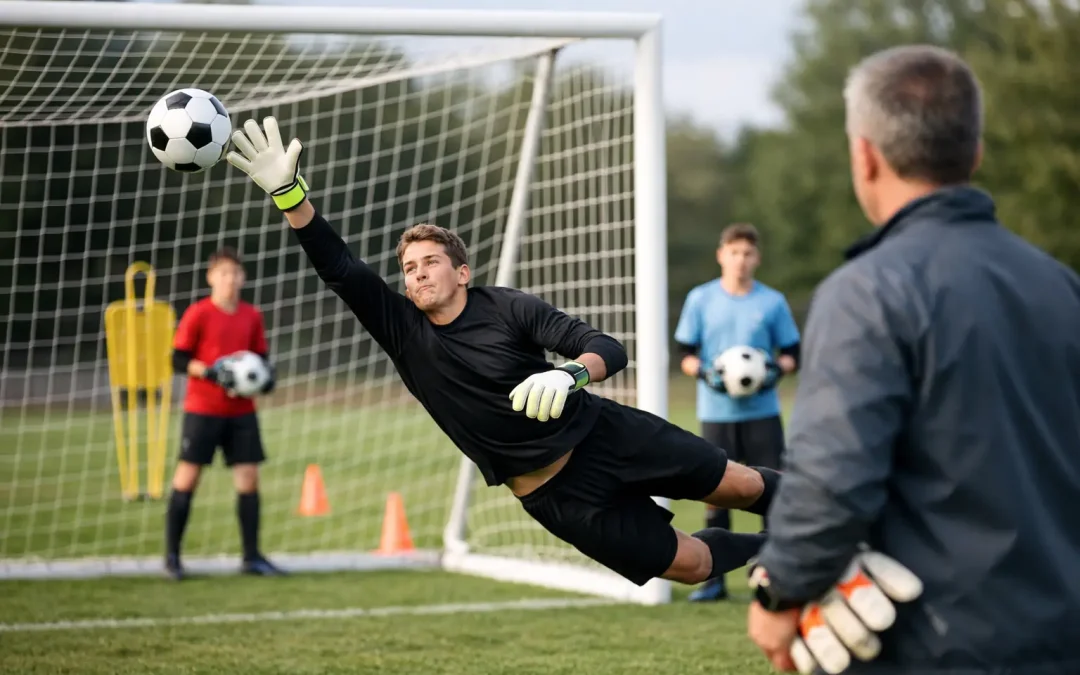
One mistake can define a goalkeeper in the eyes of the crowd, even when they have made ten strong decisions before it. That is why a proper guide to goalkeeper development matters. For young keepers and their families, progress is not just about making more saves. It is about building technique, judgement, resilience and confidence in a way that stands up under real match pressure.
Goalkeeping is the most specialised role on the pitch. A player can be athletic and brave and still struggle badly without the right coaching. Equally, a quieter player can become an excellent keeper when their footwork, handling, positioning and decision-making are developed properly. The key is having a clear process, not random drills or sessions built only around shot stopping.
What a real guide to goalkeeper development should cover
A goalkeeper needs far more than reflexes. Good development starts with the technical basics, but it cannot stop there. The role demands clean handling, balanced set position, efficient movement, smart angles, communication, distribution and the ability to read moments before they fully unfold.
This is where many players lose time. They train the exciting parts and neglect the parts that create consistency. Diving saves look impressive, but if the starting position is wrong or the feet are slow, the keeper is already chasing the action instead of controlling it. Strong goalkeeper coaching works from the ground up, so the player understands why each action matters.
For younger players, the focus should be on coordination, safe diving mechanics, catching technique and confidence dealing with the ball. For older or more advanced keepers, the demands widen quickly. They need to manage crosses, defend space behind the line, distribute under pressure and make faster decisions in game-like situations. The training has to match the player’s age, level and goals.
Technique first, but never technique alone
The best goalkeeper development programmes teach technique in context. A keeper should learn how to catch, collapse dive, extend dive and recover quickly. They should also learn when each technique is actually the right solution.
Take handling as an example. Clean hands reduce rebounds and settle the team, but not every ball should be caught. Sometimes the safer choice is to parry wide, sometimes to tip over, and sometimes to hold shape and delay. That is why repetition alone is not enough. The player needs coaching that helps them recognise the picture in front of them.
Footwork is another area that often gets underestimated. Many goalkeeping problems start before the shot. If the feet are heavy, the set position is rushed. If the set position is rushed, the save becomes harder than it should be. Efficient movement across the goal, quick adjustment steps and balance into the final action all make a major difference. It is not always dramatic, but it wins moments.
Distribution deserves equal attention. Modern keepers are expected to start attacks, play under pressure and make calm choices with both hands and feet. For some players this means improving passing range. For others it means learning when not to force the pass. There is always a balance between bravery in possession and game awareness.
The tactical side separates average and reliable keepers
Shot stopping gets the headlines, but tactical understanding is what makes a goalkeeper dependable over a full season. Positioning, timing and game reading allow a keeper to solve problems early rather than react late.
A well-developed goalkeeper understands angles and adjusts before the ball arrives. They know when to hold the line, when to sweep, and when to narrow the space aggressively. They read body shape, pressure on the ball and the likely next pass. These details matter because they help the keeper arrive in control, not in panic.
Communication also sits here. Young keepers are often told to be louder, but volume alone is not leadership. Clear, early and useful information is what helps the back line. A simple call at the right time is more valuable than constant noise. Confidence in communication usually grows when the player understands the game better and feels secure in their own role.
This is especially important for players preparing for representative football, academy environments or club trials. Coaches notice keepers who organise, scan, decide early and bring calm to the team. Those qualities rarely appear by accident.
Confidence is trained, not wished for
Goalkeepers need a different mindset from outfield players. The position asks for courage, concentration and the ability to recover quickly after mistakes. A keeper can do most things right and still concede. If confidence depends on perfection, it will not last.
That is why a strong development plan includes the mental side. Players need to learn how to reset after an error, stay focused during quiet periods and remain brave in contested moments. Parents also play a role here. Support matters most when it reinforces effort, discipline and learning, not only outcomes.
For younger keepers, confidence often grows from competence. When they know how to move, dive and handle safely, they attack the ball with more conviction. For older players, confidence comes from repeated exposure to pressure. Training should create realistic demands so match day feels familiar, not overwhelming.
There is also a trade-off to manage. Pushing a keeper too far beyond their current level can damage confidence. Keeping every session too comfortable can slow progress. Good coaching finds the right stretch point, where the player is challenged but still able to build successful habits.
Why one-size-fits-all training falls short
Not every goalkeeper develops at the same speed. A tall teenager dealing with crosses has different needs from a nine-year-old learning to set their feet properly. A confident shot stopper may need work on distribution and scanning. Another player may be technically sound but hesitant in contact situations.
That is why individualised coaching is so valuable. It allows the session to target what the player actually needs instead of running through generic drills. In a goalkeeper setting, small adjustments in body shape, hand position or timing can produce major gains over time. Those details are easier to identify and correct when the coach can focus closely on the player.
At Clinical Football, this player-centred approach is what drives real progression. Goalkeepers benefit when their training is structured around their current level, their match demands and the next step they are working towards. That might be building a beginner’s confidence, preparing for trials or sharpening performance during the season.
Small group work can also be useful, especially for decision-making, communication and competitive habits. The key is making sure the environment stays purposeful. Keepers need enough repetition to build technique and enough realism to transfer that work into games.
What parents and players should look for
If you are choosing goalkeeper coaching, look beyond busy sessions and flashy drills. Ask whether the training covers handling, footwork, diving, positioning, distribution and decision-making. Ask how progress is measured. Ask whether the coach can adapt the work to the player’s age and stage of development.
It is also worth paying attention to how the coach teaches. Strong goalkeeper coaching is demanding, but it should also be clear and encouraging. Players improve fastest when they understand what they are being asked to do and why it matters. Correction should build standards, not fear.
For parents, patience is essential. Goalkeeper development is rarely linear. There will be weeks where confidence jumps and weeks where mistakes feel louder than progress. That does not always mean the player is going backwards. Sometimes it means they are learning a more advanced part of the role and adjusting to higher expectations.
For players, the biggest advantage comes from consistency. One session helps. Regular, focused training changes habits. Goalkeeping is a position built on repeated detail, and detail takes time.
The best keepers are not simply brave or talented. They are trained with purpose, coached with clarity and developed in a way that matches the real demands of the game. If a goalkeeper is given that kind of environment, improvement stops being guesswork and starts becoming a pathway.